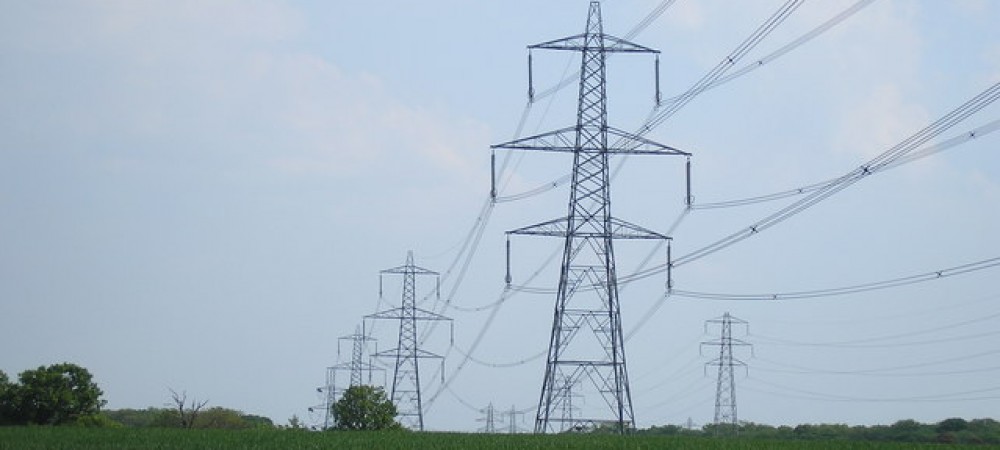
Protecting the Grid is Not Enough

I’ve mentioned before that even if the government began a program to harden our critical infrastructures, it would take years before those improvements were complete. Meanwhile, we would be vulnerable. Actually, even after that we would be vulnerable. An EMP attack would destroy all the computers and control systems that produce our food and allow our banks to function. Home appliances would not work, even if there was power available. Companies could not operate, and would close. Everyone would be out of work. Communications would be down, and there would be massive confusion.

For this reason, it is necessary to harden critical infrastructures AND to build up inventories of food and critical electrical components. Better yet, work towards communications and control technologies which are highly resistant to EMP. Fiber optics should be used for all critical communications and to power control equipment (via photovoltaic cells) which is enclosed in Faraday cages. If your washing machine stops working, you can wash by hand. If your well pump or your neighbor’s farm equipment stops working, that’s a serious problem.

Survival Communities

Your chance of surviving an EMP disaster rises dramatically when disaster preparations include a larger community. The larger that community, the better its chances of successfully defending itself and rebuilding. The trouble is, it is hard to convince people of the danger to the point that they are willing to spend what it takes to prepare. If only one person in a hundred is willing to do so, it is hard to gather these scattered few. Even if they found one another, there is the difficulty of coordinating their efforts. Who would do the work? Who would pay for things? How would decisions be made?

It seems to me that the best solution is for wealthy entrepreneurs to set up survival communities organized as companies. Let us call such a person John. Before a crisis, John gives offers of employment to people he wishes to recruit into his community. The recruits start work at the moment an EMP occurs, and are paid in food which John has stored in hidden, defensible warehouses. The jobs the employees do are related to survival and rebuilding: defense, farming, infrastructure repair. Since the employees pay for nothing and have no obligations prior to a disaster, it is easy to recruit them. Since no money changes hands, the company is an abstraction until an EMP occurs. The fortified warehouse and the food and supplies inside it are John’s personal property.

Let us call the company the Corps, and call the employees “corpsmen.” John recruits corpsmen living near his warehouse to serve as hosts for other corpsmen (who live in the hosts’ houses or camp out in their fields), so in a disaster the corpsmen move to and defend a well-defined neighborhood. Ideally this neighborhood is rural, so it is easier to defend and provides plenty of land for growing crops.

The well-insulated warehouse (perhaps 6,000 ft2 with 15 feet of headroom) is fortified by an 8-foot high encircling berm which protects not only the warehouse but also the compound from small arms fire. One or two hundred corpsmen live in the warehouse or in tents in the compound in order to safeguard it, should raiders breach the neighborhood defensive perimeter. The warehouse uses solar energy for refrigeration to extend the shelf life of stored foods. It also stores seed and includes a Faraday cage room to store solar panels and other sensitive electronic supplies.

I imagine such a community sized to employ and feed up to 600 people, including 150 children (age 0-12). The 450 adults would be split into three or more groups that would be engaged in farming or providing neighborhood security. There is nothing magic about this number, but for any one group to exceed 150 adults might weaken group cohesion and allow strangers to infiltrate.

Apocalypse Unknown

Apocalypse Unknown is a new book by Dr. Peter Vincent Pry. It’s a big, heavy, expensive ($50) volume with the front cover showing a tiny Earth alongside a huge sun in the process of throwing off a coronal mass ejection.

When I buy a new book, I always worry it will be a complete rehash of what I’ve already read. That wasn’t the case here. The Department of Homeland Security asked Dr. Pry to suggest some National Planning Scenarios involving EMP threats, and he has included four of these. Some aspects of these threats were new to me. For example, low altitude nuclear detonations release Source Region EMP (SREMP) which can propagate through power lines to destroy transformers well outside the region affected by the blast. Weather balloons can lift nuclear weapons to 30 kilometers, high enough to create an EMP-affected region 1,200 kilometers in diameter. The region encompassed by a coronal mass ejection can be much larger than the Earth, so a solar storm like the Carrington Event could easily knock out power worldwide. Prolonged loss of power due to any of these events would probably lead to the Fukushima syndrome at some of the 104 nuclear power plants in the US, with burning of fuel rods and widespread radioactive fallout.

On the bright side, Dr. Pry lays out three independent, affordable proposals for hardening the grid to EMP. He points out that China and Russia have already hardened their systems, and several other countries have started to do so. He feels that with Homeland Security’s heightened interest in the EMP threat, there is a good chance that we will finally be able to move ahead in dealing with an EMP.

Of course, those who consider us the Great Satan may regard our increased efforts towards self protection as a reason to speed up their own timetables.

Be the Governor’s Friend

I used to assume that, in an emergency, governments would seize food stockpiles and distribute them equitably among the populace. Yet if it is clear that the emergency is severe and long term, political leaders will probably choose to seize supplies and hoard them for themselves and their friends. All the political talk we’ve heard about the needs of common folk (not to mention the disadvantaged) may be insincere, a way of persuading voters to fork out more in taxes. Perhaps the reason EMP is not discussed by government is because our leaders know they can use the police and military to secure food for themselves, and feel it is too expensive to try to save everyone else. The governor probably already has a list of private food warehouses and a plan to send the National Guard out to secure them. We can expect that in a serious emergency the police and National Guard will be used by local warlords (often former politicians) to monopolize supplies and restrict their distribution.

This is not all bad. At least somebody will survive. Yet for those of us outside the government coterie, neither friends of the governor nor members of the National Guard, it highlights the need to be able to hide or defend your own supplies from large invading forces. You won’t be able to keep them secret indefinitely, since by simply staying alive you are advertising the fact that you have stockpiles.

Good News on Geomagnetic Storms

A NERC report issued in February 2012 and now referred to in the Wikipedia entry for “geomagnetic storm” downplays the impact of solar coronal mass ejections on the grid:

According to [an earlier] study by Metatech corporation, a storm with a strength comparative to that of 1921 would destroy more than 300 transformers and leave over 130 million people without power, with a cost totaling several trillion dollars. A massive solar flare could knock out electric power for months. These predictions are contradicted by a NERC report that concludes that a geomagnetic storm would cause temporary grid instability but no widespread destruction of high-voltage transformers. The report points out that the widely quoted Quebec grid collapse was not caused by overheating transformers but by the near-simultaneous tripping of seven relays.

If NERC is right, then our primary concern should not be EMPs caused by the sun, but EMPs caused by high altitude nuclear blasts. So if you trust the good intentions of the leaders of Iran, North Korea, and Pakistan,you can rest easy.

End of Mayan Cycle

Today marks the end of the Mayan cycle, and pundits are taking advantage of the occasion to talk about disasters. I find it interesting that so few talk about nuclear EMP terrorism. People seem to prefer the thought of natural disasters or economic collapse, crises driven by some relentless but dispassionate force. The idea that their doom could result from the whim of some petty dictator in Iran or North Korea adds insult to injury.

The end of the Mayan cycle coincides with the holiday season and the end of 2012. This blog deals with sobering issues, so it is good to remember occasionally that there is hope for the future, that the broad sweep of history is toward betterment of humankind. While we work to secure ourselves from realistic dangers, we should take some time to appreciate what we now have. I wish my readers a happy new year!

North Korea Could Launch an EMP Attack Now

Washington Times ran an article suggesting that North Korea has already achieved the capability of launching an EMP attack on the US:

North Korea now has an intercontinental ballistic missile (ICBM) capable of delivering a nuclear weapon to the United States, as demonstrated by their successful launch and orbiting of a satellite on Dec. 12. Certain poorly informed pundits among the chattering classes reassure us that North Korea is still years away from being able to miniaturize warheads for missile delivery, and from developing sufficiently accurate missiles to pose a serious nuclear threat to the United States. Philip Yun, director of San Francisco’s Ploughshares Fund, a nuclear disarmament group, reportedly said, “The real threat from the launch was an overreaction that would lead to more defense spending on unnecessary systems. The sky is not falling. We shouldn’t be panicked.”

In fact, North Korea is a mortal nuclear threat to the United States— right now.

North Korea has already successfully tested and developed nuclear weapons. It has also already miniaturized nuclear weapons for ballistic missile delivery and has armed missiles with nuclear warheads. In 2011, the director of the Defense Intelligence AgencyLt. General Ronald Burgess, testified to the Senate Armed Services Committee that North Korea has weaponized its nuclear devices into warheads for ballistic missiles.

North Korea has labored for years and starved its people so it could develop an intercontinental missile capable of reaching the United States. Why? Because they have a special kind of nuclear weapon that could destroy the United States with a single blow.

In summer 2004, a delegation of Russian generals warned the Congressional Electromagnetic Pulse (EMP) Commission that secrets had leaked to North Korea for a decisive new nuclear weapon — a Super-EMP warhead.

Any nuclear weapon detonated above an altitude of 30 kilometers will generate an electromagnetic pulse that will destroy electronics and could collapse the electric power grid and other critical infrastructures — communications, transportation, banking and finance, food and water — that sustain modern civilization and the lives of 300 million Americans. All could be destroyed by a single nuclear weapon making an EMP attack.

A Super-EMP attack on the United States would cause much more and much deeper damage than a primitive nuclear weapon, and so would increase confidence that the catastrophic consequences will be irreversible. Such an attack would inflict maximum damage and be optimum for realizing a world without America.

Both North Korean nuclear tests look suspiciously like a Super-EMP weapon. A Super-EMP warhead would have a low yield, like the North Korean device, because it is not designed to create a big explosion, but to convert its energy into gamma rays, that generate the EMP effect. Reportedly South Korean military intelligence concluded, independent of the EMP Commission, that Russian scientists are in North Korea helping develop a Super-EMP warhead. In 2012, a military commentator for the People’s Republic of China stated that North Korea has Super-EMP nuclear warheads.

A Super-EMP warhead would not weigh much, and could probably be delivered by North Korea’s ICBM. The missile does not have to be accurate, as the EMP field is so large that detonating anywhere over the United States would have catastrophic consequences. The warhead does not even need a re-entry vehicle, as an EMP attack entails detonating the warhead at high-altitude, above the atmosphere.

So, as of Dec. 12, North Korea’s successful orbit of a satellite demonstrates its ability to make an EMP attack against the United States — right now.

The Congressional EMP Commission estimates that, given the nation’s current unpreparedness, within one year of an EMP attack, two-thirds of the U.S. population — 200 million Americans — would probably perish from starvation, disease and societal collapse.

Thus, North Korea now has an Assured Destruction capability against the United States. The consequences of this development are so extremely grave that U.S. and global security have, in effect, gone over the “strategic cliff” into free-fall. Where we will land, into what kind of future, is as yet unknown.

Nevertheless, some very bad developments are foreseeable. Iran will certainly be inspired by North Korea’s example to persist in the development of its own nuclear weapon and ICBM programs to pose a mortal threat to the United States. Indeed, North Korea and Iran have been collaborating all along.

If North Korea and Iran both acquire the capability to threaten America with EMP genocide, this will destroy the foundations of the existing world order, which has since 1945 halted the cycle of world wars and sustained the global advancement of freedom. North Korea and Iran being armed with Assured Destruction capability changes the whole strategic calculus of risk for the United States in upholding its superpower role, and will erode the confidence of U.S. allies — perhaps to the point where they will need to develop their own nuclear weapons.

Most alarming, we are fast moving to a place where, for the first time in history, failed little states like North Korea and Iran, that cannot even feed their own people, will have power in their hands to blackmail or destroy the largest and most successful societies on Earth. North Korea and Iran perceive themselves to be at war with the United States, and are desperate, highly unpredictable characters. When the mob is at the gates of their dictators, will they want to take America with them down into darkness?

North Korea Orbits Satellite

North Korea recently launched a satellite into polar orbit, demonstrating its capability to send payloads anywhere on Earth. The question now is whether they have managed to reduce the size of their nuclear weapons to what their rockets can handle. If so, they are able to threaten anyone anywhere.

What the newspapers fail to mention is that a satellite may itself be a nuclear weapon, patiently waiting for the signal to detonate when it passes over its target. It wouldn’t even have to leave orbit if it were used as a HEMP (high altitude nuclear electromagnetic pulse) weapon. No one would know that the satellite was not just for weather or communications, so there would be no warning at all before a country’s electronics were fried.

On the other hand, when the satellite exploded, our military would know it was the one launched by North Korea, and that nation would be punished. They must realize that, so we can hope that this will restrain them from using a satellite this way.

Where’s the Wheat?

The USA is the world’s preeminent food exporter, so it seems reasonable to suppose that in an emergency we would have huge stockpiles of it sitting around. Consider wheat, which unlike most agricultural products normally has a long shelf life and doesn’t require refrigeration. It is produced in the following states:

TOP TEN WHEAT PRODUCING STATES - 2001 Spring Wheat - Amounts in Bushels (1000): North Dakota 234,600; Minnesota 79,200; Montana 65,550; South Dakota 64,350; Idaho 33,320; Washington 25,830; Oregon 5,250; Colorado 3,168; Utah 784; Wisconsin 360.

Notice that wheat is grown far from population centers. Companies like Cargill buy it from farmers in the fall and store it in huge grain silos at railheads, shipping it out as needed. So if you happen to live in a place like North Dakota, you don’t have to look far for wheat berry. If you want the wheat transported somewhere else, or processed into flour, that’s a problem. There is no power for flour mills or for pumping diesel fuel into trucks. If you managed somehow to drive a wheat-laden truck into a city, your cargo would probably be stolen by thieves or commandeered by local authorities. What could they pay you with, anyway?

Nor would the wheat stored at railheads last long. Normally there is a screw mechanism in silos that continuously circulates the grain, killing pest insects and preventing mildew. Without power, the grain would rot or be eaten by pests before much of it could be eaten by people.

I’m not a farmer and I look forward to hearing from someone more knowledgeable that the situation is not as bad as I’ve described.


Second Nuclear Age

Paul Bracken just published The Second Nuclear Agewhich examines the implications of nuclear proliferation. He criticizes American strategic thinkers for downplaying the importance of nuclear weapons in world politics, and for letting America’s nuclear stockpile become antiquated.

Although Bracken adds useful perspectives to the conversation about world politics, he fails to address the threat of EMP weapons. This surprises me, because the damage a single nuclear weapon can do through an electromagnetic pulse vastly exceeds any blast damage it might cause. He does mention that some weapons can affect communications and the electric grid, but he seems to regard these as short term problems and does not appreciate the grim and profound implications. For example, it does not make a big difference whether an enemy has one or one hundred nuclear warheads; he can destroy a large country with just a single warhead used to generate an HEMP.

The only good thing about EMP weapons is that all nations are vulnerable. This is good because it serves as an incentive to work together to find solutions. Israel and China may develop hardening technical fixes or antimissile defenses that can be used by everyone. Instead of the US saving Israel, Israel may save the US, if we can all just survive the next few years.